Home › Commercial Stamped and Decorative Concrete
Reliable, professional commercial stamped concrete in Bend, OR from Premier Concrete Bend. Contact us today for a free on-site estimate.
Premier Concrete Bend provides professional commercial stamped concrete throughout Bend, OR, Oregon and the surrounding area. Our licensed, insured crew delivers safe, clean, on-time work with a free estimate before anything begins. Call (541) 546-0257 or request your free quote.
Commercial Stamped Concrete for Bend Businesses
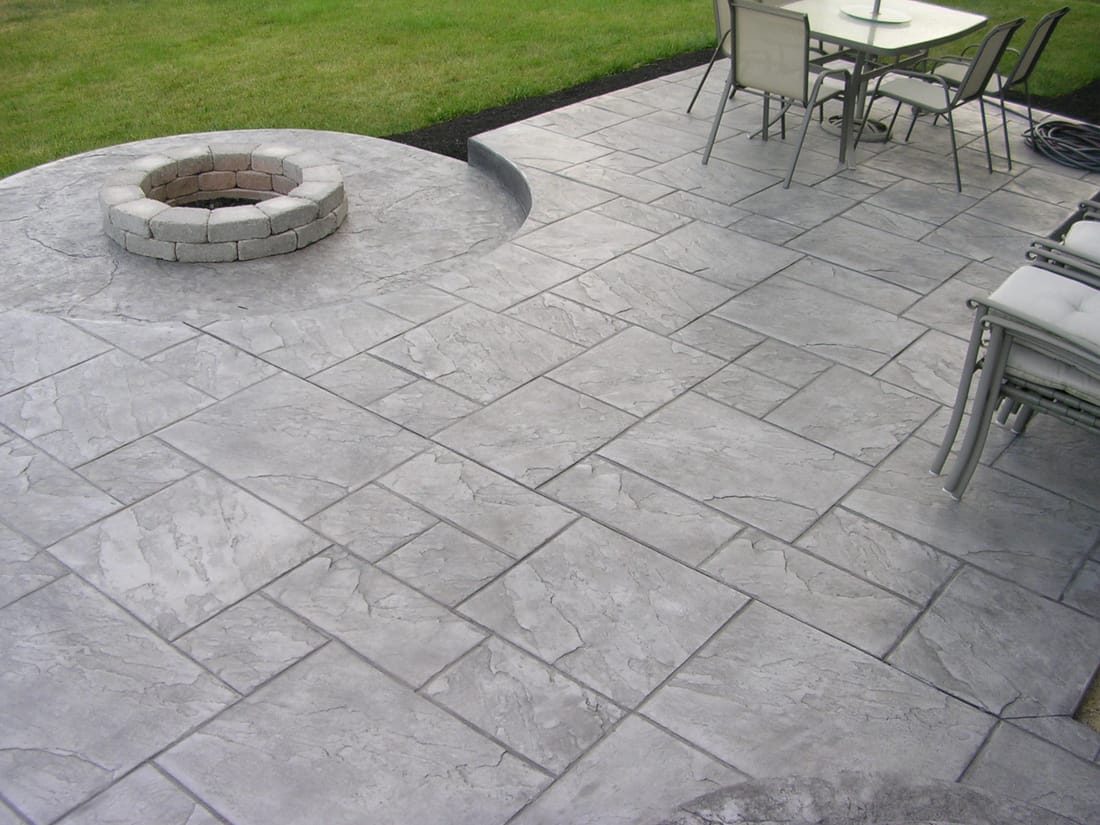
Commercial stamped concrete gives Bend businesses a durable surface that also works as a design element. Premier Concrete Bend focuses on installs that can handle real traffic from customers, delivery trucks, and daily operations while still looking clean and professional.
We install commercial stamped concrete for storefronts, restaurant patios, plazas, sidewalks, courtyards, hotel entries, office parks, and light‑duty vehicle areas. The goal is to get you a surface that performs like a high strength slab but looks like natural stone, slate, brick, or wood, without the maintenance and replacement costs that often come with those materials.
In Central Oregon, the freeze–thaw cycle, deicing salts, and UV exposure are tougher on concrete than in many other parts of the country. Our mix designs, reinforcement choices, and sealer systems are selected for Bend’s climate, not a generic national standard. That is the difference between a stamped slab that looks good for twenty years and one that starts scaling or flaking after a few winters.
Premier Concrete Bend approaches every commercial stamped project as both a structural slab and a finish product. We plan the base, reinforcement, joint layout, slopes, and drainage first, then we lock in the pattern, color, and surface texture that fit your brand and usage.
Design & Pattern Options That Function in Real Commercial Use
Before we quote a commercial stamped concrete job, we sort the design into three parts: pattern, color system, and texture profile. This keeps the finished surface practical, not just attractive on paper.
Common patterns we install for Bend businesses include: ashlar slate for plazas and entries, seamless stone for larger areas where you want fewer visual joints, boardwalk or plank patterns when you like the wood look without the rot, and running‑bond or herringbone brick for sidewalks and pedestrian paths. For busy commercial spaces we usually avoid patterns with very deep grout lines, which can catch high heels, cart wheels, or chair legs.
Color can be added with integral color in the mix, powdered color hardeners on the surface, or acid/acetone stains after curing. For high traffic restaurant patios or hotel entries, we often combine integral base color with a powdered release that adds realistic variation in the stamped “grout” and low points. This gives depth without relying solely on surface coatings that may wear away.
Texture profile matters a lot in Bend’s winters. A smooth, glossy decorative finish is a slip hazard when it is wet or icy. For commercial walks and outdoor seating areas we recommend light to medium texture with an anti‑slip additive in the sealer. Indoors or in covered spaces, we can go smoother and richer in color, but we still take cleaning and maintenance into account based on how your staff will use the space day to day.
How the Commercial Stamped Concrete Process Actually Works
A typical commercial stamped concrete install from Premier Concrete Bend follows a sequence that reduces risk and keeps your business disruption as low as possible.
1. Site evaluation and layout: We check existing grades, drainage paths, and subgrade conditions. In Bend, many sites sit on compacted fill or native decomposed volcanic material. We verify compaction and, if needed, bring in and compact additional base rock so the slab will not settle or heave unevenly.
2. Forming and base prep: We set forms to the final elevations, including required slopes for snowmelt and drainage to planters or drains. We install and compact 4 to 8 inches of crushed rock depending on load needs and soil conditions. For commercial traffic areas and dumpster pads we often thicken the slab and add more base.
3. Reinforcement and mix: We place rebar or welded wire mesh, and in many commercial projects we add synthetic fibers to the concrete mix. We specify air‑entrained concrete that handles Bend freeze–thaw cycles better. Slab thickness is typically 4 to 6 inches for pedestrian areas, thicker where vehicle loading requires it.
4. Placement and stamping: We pour, screed, and float the slab to a consistent surface. Timing is critical. Once the concrete reaches the right firmness, we apply color hardener if specified, broadcast release, then set and press the stamp mats in sequence, matching joints and pattern continuously. This entire stage is managed closely so one area is not over‑stamped or left too soft.
5. Detailing and saw‑cutting: After initial set, we wash off excess release, refine joints, edges, and any surface detailing. Control joints are saw‑cut at planned locations and depths to control cracking. For curved walks or irregular shapes, we may use a combination of tooled and sawed joints.
6. Curing and sealing: For Bend’s dry climate, proper curing is important so color and surface strength develop correctly. We typically use a curing compound or wet cure method, then return after the concrete reaches the right age to clean thoroughly and apply a commercial‑grade sealer with the selected sheen and slip resistance.
Cost Drivers & Budget Planning for Bend Commercial Projects
Commercial stamped concrete costs more than plain broom‑finished slab, but less than installing actual stone or brick over a structural base. Premier Concrete Bend breaks out pricing so you can see what is driving the number and where adjustments are possible.
Major cost factors include slab thickness and reinforcement, access and staging, pattern complexity, coloring system, and sealer type. A basic integrally colored, lightly stamped sidewalk with standard thickness and straightforward access will be at the lower end. A multi‑color, deep pattern plaza with radius edges, thickened sections, and night or weekend work will be higher.
In Bend, seasonal timing also affects cost. Pouring in the shoulder seasons can require heaters, insulated blankets, or accelerators to keep the concrete within the correct temperature range during curing. Winter work often includes more protection measures and site logistics, which adds labor and material cost. If your schedule allows, we can plan poor weather phases for structural work and reserve high‑detail stamping for more stable conditions.
We routinely work with property managers, architects, and general contractors to meet bid budgets while preserving the look you want. Sometimes that means simplifying the pattern in low visibility areas, using integral color instead of multiple stains, or adjusting the layout so we pour in larger, more efficient sections. Our proposals spell out mix specs, reinforcement, pattern names, color systems, and sealer type so there are no surprises later.
Durability, Maintenance, and Common Issues in Bend’s Climate
Stamped and decorative concrete will fail early if it is treated as purely cosmetic. Premier Concrete Bend designs and installs with Bend’s real conditions in mind so you avoid the common problems seen in poorly built projects.
Freeze–thaw damage and surface scaling often come from low quality concrete, inadequate air entrainment, or improper finishing when the surface is over‑worked with water or finished while bleed water is present. We specify appropriate air content and finish only when the surface is ready. We also place control joints at the right spacing and depth so shrinkage cracks follow planned lines whenever possible instead of running randomly across the pattern.
Deicing salts and sand used on Bend’s winter sidewalks can wear sealers and open the surface to staining. We recommend a maintenance schedule that includes cleaning with a neutral pH cleaner and resealing every 2 to 4 years depending on traffic and exposure. For restaurant patios and brewery spaces where food and beverage spills are common, we lean toward sealers that resist staining and allow easier cleaning without becoming too slick.
Color fade is another concern. UV light at Bend’s elevation is strong. Integral color goes all the way through the concrete, so it will not “peel” but the sealer and release color accents can lighten over time if not maintained. We use UV‑resistant commercial sealers and can refresh color accents when we reseal if desired.
If problems do appear, we have repair strategies specific to stamped and decorative work, such as partial panel replacement with pattern matching, texture skins to disguise repairs, or recoloring and resealing to even out variations. We discuss realistic expectations up front so you know what can and cannot be fixed invisibly later.
Planning, Scheduling, and What to Expect When You Hire Us
Commercial work in Bend has tight windows, tenants to keep happy, and weather to work around. Premier Concrete Bend builds the schedule around your operations so the upgrade to commercial stamped concrete disrupts as little as possible.
On most projects we start with a site meeting and basic layout sketch, then provide a proposal with pattern samples and color options. If you are working with an architect or designer, we coordinate directly so their specifications match what is practical in our climate and with your budget. For existing businesses, we can break work into phases, keeping customer access open through alternate routes while sections are poured and curing.
We also plan around Bend’s typical weather patterns. Large exterior pours are rarely scheduled during stretches when overnight lows are expected to drop below freezing without a plan for protection. In peak summer heat, we may start earlier in the morning or use set controlling admixtures so the concrete does not flash set before it can be finished and stamped correctly.
Before we start, you will know where trucks will stage, how long each area will be out of service, and when you can put foot and vehicle traffic back on the slab. For many pedestrian areas, light foot traffic is allowed after 24 to 48 hours, with full cure and sealing completed before heavier use. We provide written care instructions for your maintenance staff, including what ice melt products are safest on stamped and decorative concrete.
Our focus is to leave you with a surface that works for your business, that your staff can maintain without special tools, and that keeps its appearance in Bend’s climate for the long term.